
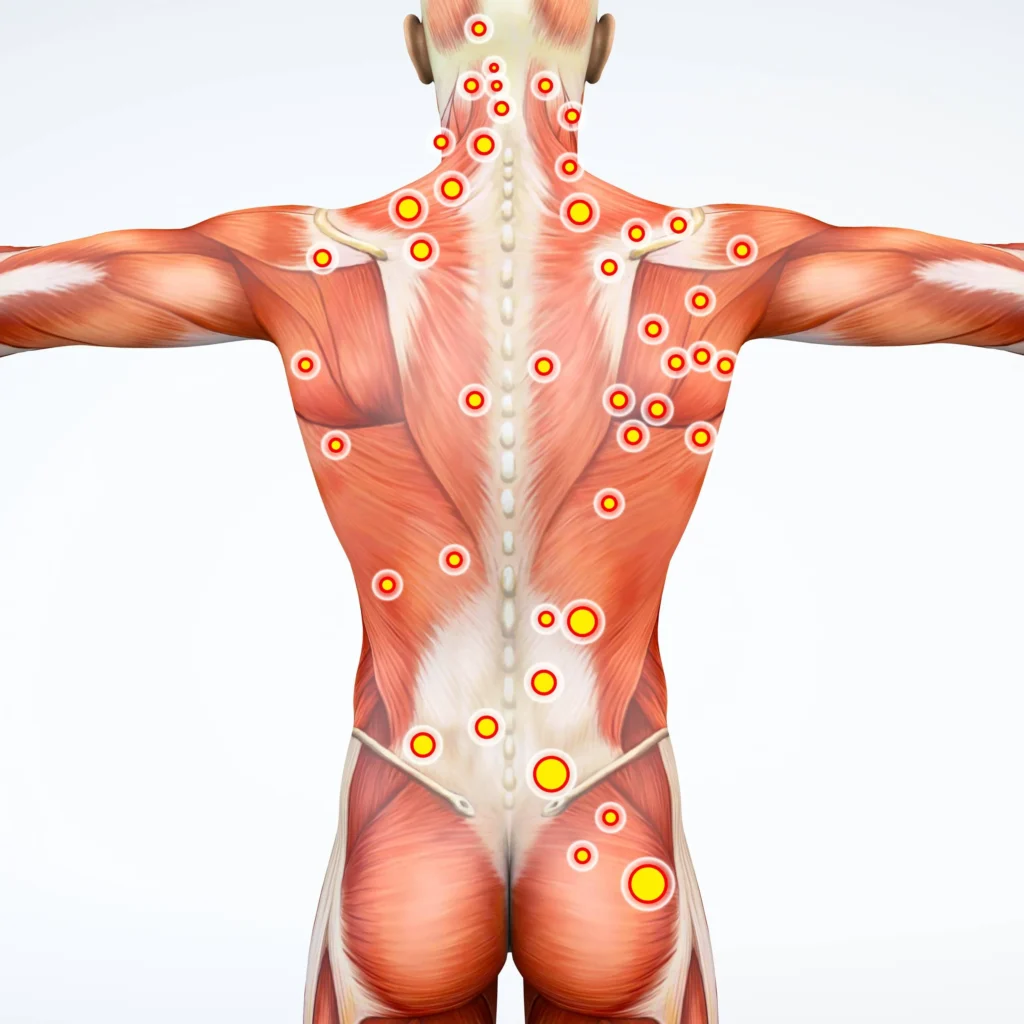
Why you need to get your muscle knots treated by a Remedial Massage Therapist
Myofascial trigger points, commonly known as "muscle knots," can cause chronic pain and affect a person's range of motion. This can have a large impact on quality of life, mood, physical ability, and overall health. While they might seem like a minor annoyance, untreated trigger points can lead to widespread dysfunction.
What Are Muscle Knots?
A trigger point is a hyperirritable spot within a taut band of skeletal muscle. Essentially, a small section of muscle fiber is stuck in a state of continuous contraction. This localized tension cuts off the blood supply to the area, leading to a buildup of metabolic waste and causing localised pain. Furthermore, trigger points are notorious for "referred pain"-sending pain signals to other areas of the body. For example, a knot in your shoulder blade might cause a tension headache or pain radiating down your arm.
Why You Shouldn't Ignore Them
Leaving trigger points untreated can cause your body to alter its movement patterns to avoid pain. This compensatory movement places stress on other muscles and joints, creating a cascade of new aches and pains. Over time, chronic muscle tension can lead to joint stiffness and an increased risk of injury.
How a Remedial Massage Therapist Can Help
A qualified Remedial Massage Therapist is trained to identify and effectively treat these specific points of tension:
- Targeted Pressure: Using specific techniques like ischemic compression, the therapist applies sustained pressure to the knot to force the muscle fibers to relax and allow fresh blood flow back into the tissue.
- Myofascial Release: Stretching and smoothing the connective tissue (fascia) that surrounds the muscle to restore flexibility.
- Dry Needling: A highly effective technique where a fine needle is inserted into the trigger point to elicit a twitch response, rapidly releasing the tension.
- Postural Advice: Identifying the root cause of the knots-such as poor desk ergonomics or repetitive strain-and providing strategies to prevent them from returning.