
What is Kyphosis?
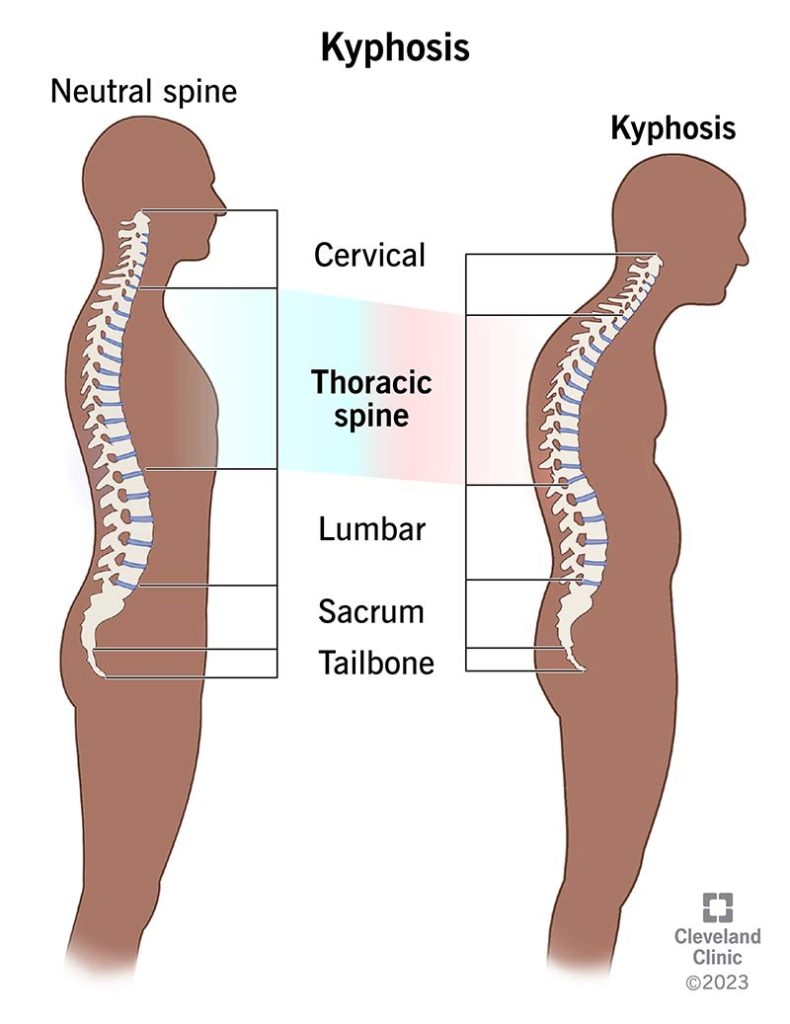
Kyphosis is a condition where your spine curves outward more than it should. This causes your upper back around the thoracic region to bend forward. The curvature can make it look like you're hunched over or slouching. People sometimes call it "hunchback" or "roundback."
Most of the time, kyphosis doesn't cause health problems or need medical treatment. But in severe cases, kyphosis can cause pain or breathing issues.
What are the symptoms of kyphosis?
The main symptoms of kyphosis include:
- Rounded shoulders.
- A curve or hump in your upper back.
- Tight hamstrings (muscles in the back of your thighs).
Severe kyphosis may cause: pain or stiffness in your back and shoulder blades, numb or weak or tingling legs, extreme fatigue, balance issues, bladder or bowel incontinence, and shortness of breath.
Can kyphosis be prevented?
You can take steps to prevent postural kyphosis by maintaining good posture, strengthening abdominal and back muscles, maintaining a healthy weight, and exercising to strengthen your muscles and stay flexible.
How is kyphosis treated?
- Physical therapy: Exercises can strengthen abdominal and back muscles to relieve pain and improve posture.
- Pain medication: Anti-inflammatory medications relieve back pain.
- Back brace: Your provider may recommend that you wear a brace, especially for growing children with Scheuermann's kyphosis.
- Surgery: Spinal fusion surgery can reduce spine curvature in severe cases.