
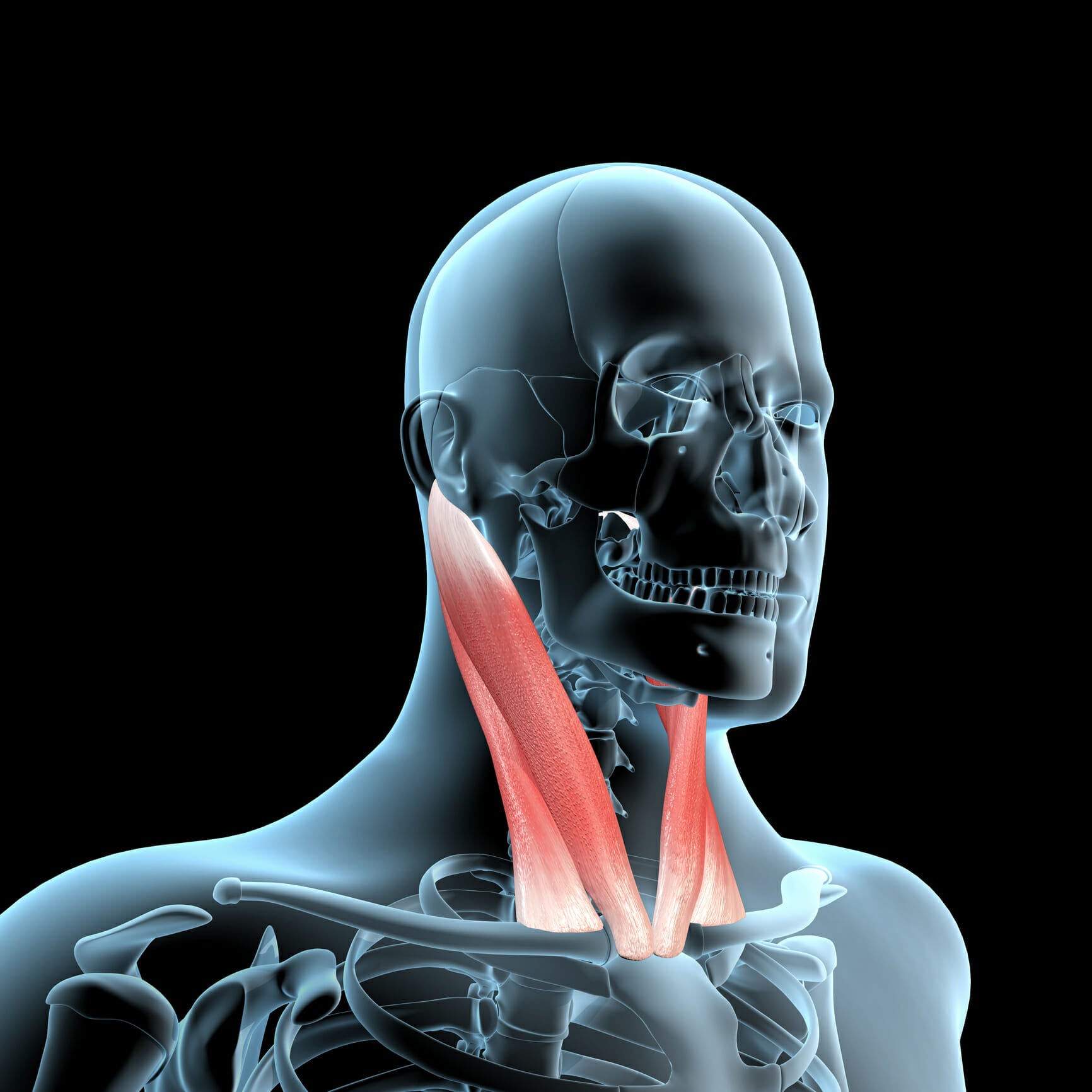
SCM Sternocleidomastoid
The Sternocleidomastoid (SCM) is one of over 20 pairs of muscles acting on the neck. The SCM has dual innervation and multiple functions. It is a superficially palpable muscle with a prominent role in both movement and stabilization of the head and neck.
The SCM muscle is named for its attachments: it originates from the sternum (sterno-) and the clavicle (cleido-), and inserts on the mastoid process of the temporal bone (-mastoid).
Functions of the SCM
- Unilateral contraction: Flexes the cervical vertebral column to the same side (lateral flexion) and rotates the head to the opposite side.
- Bilateral contraction: Flexes the neck anteriorly, drawing the head forward. It also assists in elevating the rib cage during deep inhalation.
Common Issues and Symptoms
When the SCM becomes tight or develops trigger points, it can cause a variety of surprising symptoms, including:
- Tension headaches and migraines, often felt around the eye, forehead, or back of the head.
- Neck pain and stiffness, limiting your ability to turn your head.
- Dizziness, vertigo, or a sense of imbalance.
- Jaw pain or temporomandibular joint (TMJ) dysfunction.
- Ringing in the ears (tinnitus) or ear pain.
How Remedial Massage Can Help
Due to its complex nature and proximity to important nerves and blood vessels, the SCM should be treated by a qualified professional. Remedial massage techniques, including gentle myofascial release and targeted trigger point therapy, can effectively reduce tension in the SCM, alleviating headaches, neck pain, and associated symptoms.