
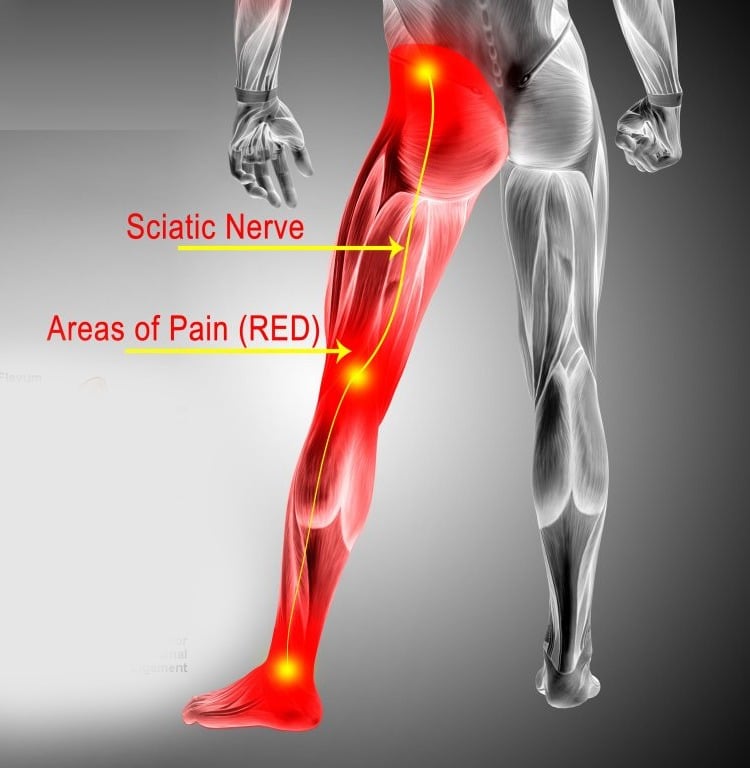
Sciatica
What is Sciatica?
Sciatica happens when irritation, inflammation, pinching, or compression affect the sciatic nerve. The sciatic nerve is the longest and thickest nerve in the body; it originates in the lower back, runs deep through the buttocks, and travels all the way down the back of each leg to the feet. When this nerve is compromised, it can cause significant discomfort that typically radiates along its path.
It's important to understand that sciatica is not a medical diagnosis in itself-it is a symptom of an underlying condition affecting the sciatic nerve.
Common Symptoms
Sciatica symptoms usually affect only one side of the body. You may experience:
- Pain: Ranging from a mild ache to a sharp, burning sensation or excruciating discomfort. It may feel like a jolt or electric shock.
- Radiating pattern: Pain that travels from the lower back or buttock down the back of the thigh and into the calf or foot.
- Numbness or tingling: A "pins and needles" sensation in the leg or foot.
- Weakness: Difficulty moving the affected leg or foot, or a feeling that the leg might give way.
- Worsening factors: Symptoms often worsen with prolonged sitting, standing up, coughing, or sneezing.
Common Causes
Several conditions can compress or irritate the sciatic nerve, including:
- Herniated Disc: The most common cause. The soft inner core of a spinal disc pushes through its tough outer ring and presses on the nerve root.
- Spinal Stenosis: Narrowing of the spinal canal in the lower back, which puts pressure on the nerves.
- Piriformis Syndrome: The piriformis muscle in the buttock spasms and compresses the sciatic nerve (which usually runs just beneath it).
- Spondylolisthesis: A condition where one vertebra slips forward over another, pinching the nerve.
- Pregnancy: Changes in posture, increased weight, and hormonal changes can increase pressure on the sciatic nerve.
Treatment Options
Most cases of sciatica resolve with conservative treatment over a few weeks. Management typically includes:
- Physical Therapy & Manual Therapy: Exercises to improve posture, strengthen core muscles, and improve flexibility. Remedial massage and myotherapy can release tight muscles (like the piriformis) contributing to nerve compression.
- Medications: Over-the-counter pain relievers, anti-inflammatories, or prescribed muscle relaxants.
- Heat and Cold Therapy: Alternating ice packs (to reduce inflammation) and heat (to relax muscles).
- Activity Modification: Avoiding prolonged sitting and engaging in gentle movement like walking or swimming to promote blood flow and healing.