
Myofascial Pain Syndrome
What is Myofascial Pain Syndrome?
Myofascial pain syndrome (MPS) is a chronic condition that arises from inflammation in your muscles and fascia (the thin, connective tissue that surrounds your muscles). "Myo" means muscle, and "fascial" refers to the fascia. While nearly everyone experiences muscle tension from time to time, the discomfort associated with MPS is persistent and often worsens over time.
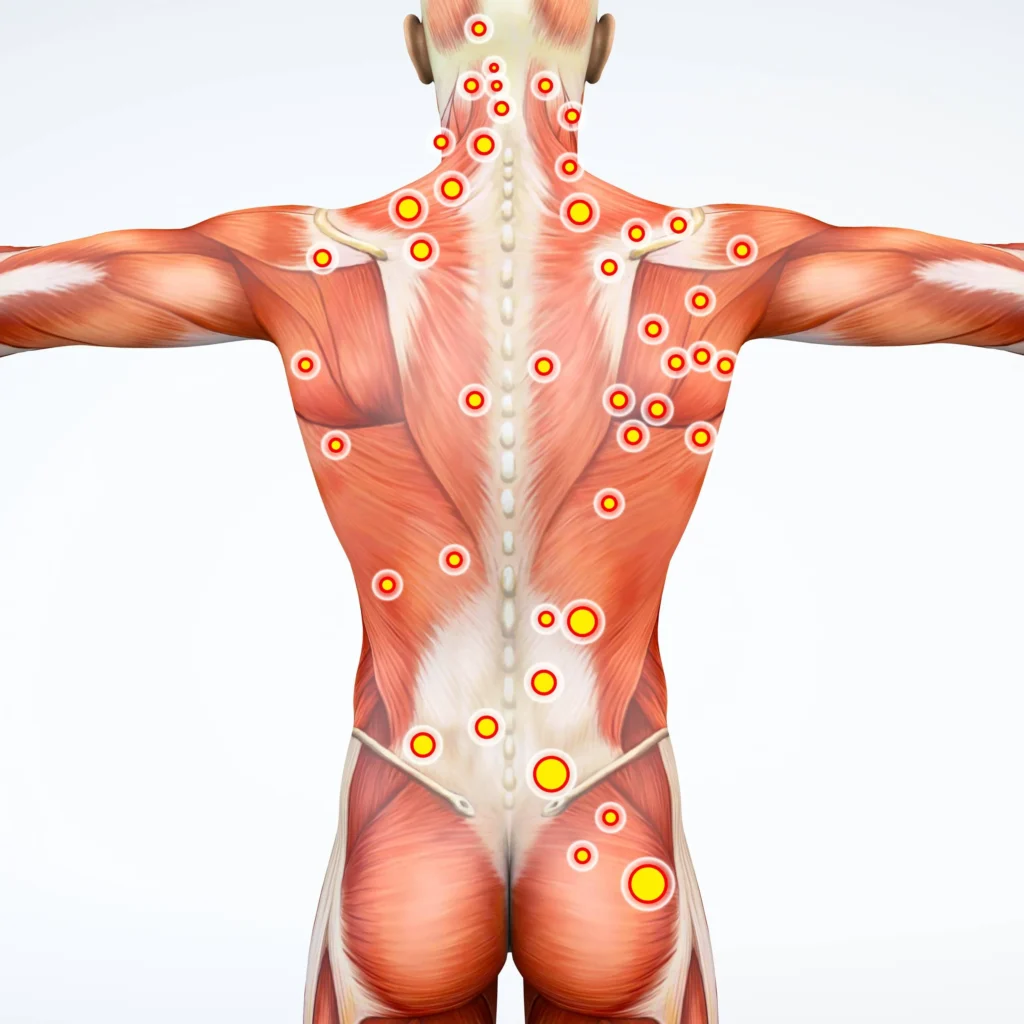
The hallmark of myofascial pain syndrome is the presence of trigger points. These are hyperirritable spots, often felt as taut bands or "knots" within the muscle. When pressure is applied to these points, they can cause intense localized pain or refer pain to other, seemingly unrelated parts of the body (referred pain).
Symptoms of MPS
- Deep, aching muscle pain that persists or worsens.
- A tender knot in a muscle that you can feel under the skin.
- Pain that refers to other areas when the knot is pressed.
- Muscle stiffness and a reduced range of motion.
- Difficulty sleeping due to pain.
- Fatigue and general malaise.
Common Causes
MPS usually develops after a muscle has been contracted repetitively or subjected to trauma. Common contributing factors include:
- Repetitive motions: Activities or jobs that require the same movement over and over.
- Poor posture: Slouching or holding the body in awkward positions for extended periods (e.g., working at a computer).
- Muscle injury: A sudden strain, tear, or direct trauma to the muscle.
- Stress and anxiety: Emotional stress can cause you to clench your muscles unconsciously, leading to trigger points over time.
- Lack of sleep or nutritional deficiencies.
Treatment and Management
Managing MPS often requires a multifaceted approach to break the cycle of pain and muscle tension:
- Manual Therapy: Remedial massage, myotherapy, and specific trigger point therapy are highly effective at releasing taut bands and deactivating trigger points.
- Dry Needling: Inserting a fine needle into the trigger point can elicit a local twitch response, helping the muscle to relax.
- Stretching and Exercise: Gentle stretching to restore muscle length, followed by strengthening exercises to improve posture and muscle endurance.
- Heat Therapy: Applying heat can help relax tense muscles and improve blood flow.
- Stress Management: Techniques like mindfulness, deep breathing, or yoga can help reduce the underlying tension contributing to the condition.