
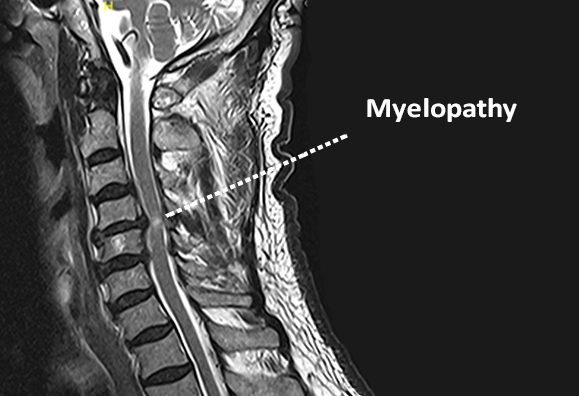
Myelopathy
What is Myelopathy?
Myelopathy is an injury to the spinal cord caused by severe compression that may be a result of spinal stenosis, disc degeneration, disc herniation, autoimmune disorders, or trauma. When the spinal cord is compressed, it can disrupt the normal flow of nerve signals between the brain and the rest of the body.
Symptoms of Myelopathy
Symptoms can vary depending on where the compression occurs (cervical, thoracic, or lumbar spine) but generally include:
- Neck, back, or arm pain.
- Tingling, numbness, or weakness in the arms, hands, legs, or feet.
- Difficulty with fine motor skills, such as buttoning a shirt or writing.
- Changes in gait or difficulty walking, often described as feeling clumsy or off-balance.
- Loss of bowel or bladder control in severe cases.
Treatment Options
Treatment for myelopathy depends on the severity of the compression and the underlying cause. Conservative treatments may include physical therapy, bracing, and medications to manage pain and inflammation. However, because myelopathy involves the spinal cord, surgical decompression is often necessary to prevent permanent nerve damage and restore function.