
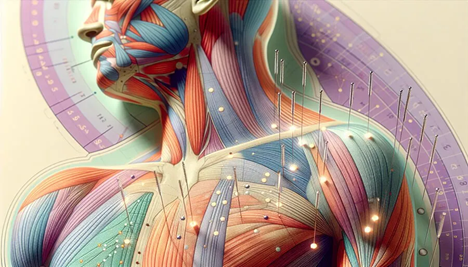
Dry Needling
Dry needling is a technique that myotherapists, physiotherapists, and other trained healthcare providers use to treat musculoskeletal pain and movement issues. It's almost always used as part of a broader treatment plan that includes manual therapy and exercise.
What is Dry Needling?
The procedure involves inserting a very fine, sterile, solid filament needle directly into a myofascial trigger point (a hyperirritable spot or "knot" within a tight band of muscle). It is called "dry" needling because no medication or fluid is injected into the body.
How Does It Work?
When a muscle develops a trigger point, it remains in a constant state of contraction, which reduces blood flow, causes a buildup of metabolic waste, and leads to pain and dysfunction. Dry needling aims to disrupt this cycle:
- Mechanical Disruption: The needle physically breaks up the knotted tissue within the trigger point.
- Local Twitch Response (LTR): Insertion of the needle often elicits a brief, involuntary muscle twitch. This LTR is a spinal cord reflex that helps "reset" the muscle's neurological activity, allowing it to relax.
- Increased Blood Flow: The micro-trauma caused by the needle stimulates a localised inflammatory response, increasing blood flow and bringing oxygen and nutrients to the area to facilitate healing.
- Pain Modulation: Dry needling can stimulate the release of endorphins (the body's natural painkillers) and alter the way pain signals are processed by the nervous system.
What Conditions Can It Treat?
Dry needling is highly effective for a wide range of conditions involving muscle tension and pain, including:
- Neck and back pain
- Shoulder pain (e.g., rotator cuff issues, frozen shoulder)
- Tennis and golfer's elbow
- Hip and gluteal pain (e.g., piriformis syndrome)
- Knee pain and IT band syndrome
- Plantar fasciitis and Achilles tendinopathy
- Tension headaches and TMJ dysfunction
Is It the Same as Acupuncture?
While both therapies use similar needles, their philosophies and applications are different. Traditional acupuncture is based on Eastern medical principles, aiming to balance the flow of energy (Qi) along specific meridians. Dry needling is based on Western anatomical and neurophysiological principles, specifically targeting muscular trigger points to relieve pain and restore function.